Running the studio
9Command
The phone app for the studio's agent sessions. Each agent's conversation or live terminal opens from a list, and rooms let several agents share one thread with Oto. On the Mac the same view sits in a small window that stays on top.
- Runs on
- Phone and Mac
Agentic OS Dashboard
A single-operator dashboard for the studio, run by a small server on the Mac that reads and writes the notes vault and connected mail, calendar and Notion. It shows projects, tasks, content, pipeline and clients, and starts and watches the agents' work.
- Runs on
- Browser
Desk
The ultrawide screen as a desk of sheets on a grid, each holding one app: Command, the Vault Reader, a browser, the calendar, projects, sketches and more. A desk is a saved arrangement of sheets, switched as tabs.
- Runs on
- Mac, on the big screen
Timeline
Every project on one timeline that zooms between detail, months, weeks and days. Bars show when each project runs, milestones sit on their dates, and the days actually worked show as dots. In the day view, clicking a day marks it as a work day.
- Runs on
- Mac
Meetings
Calls from the calendar with a prep brief. One press joins and records the call, the transcript is written on the Mac by a local speech model, and the transcript is filed with that client's records afterwards.
- Runs on
- Mac
BXS Portal
The client portal. Clients sign in with an emailed link and find their brands, the files the studio has delivered, previews of sites and presentations, and their stationery tools. The studio uploads files and releases them when they are ready.
- Runs on
- Browser
Business OS
The operations platform for Oto and the team, replacing the old ops site. It holds the strategy and offers, a chart of who holds each seat, people, pipeline, requests and the week's work, plus academies that teach how the business runs.
- Runs on
- Browser
Studio
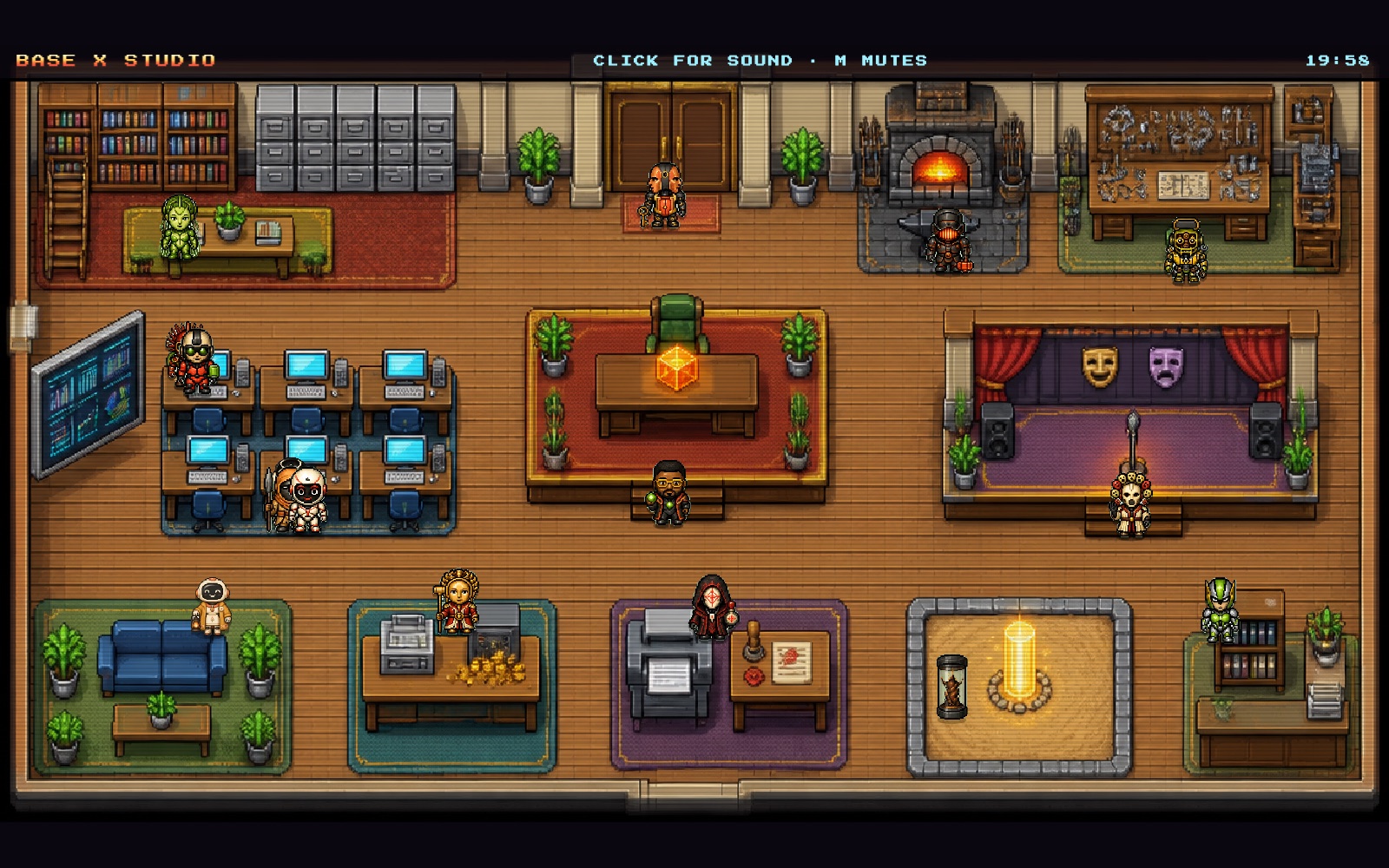
The studio as a game screen. Each agent stands on an office map, its card lit by whether its session is working, waiting or quiet. Clicking one shows its last words, a comms lane messages it, and a quest log lists what is waiting.
- Runs on
- Mac and phone
Vault Reader
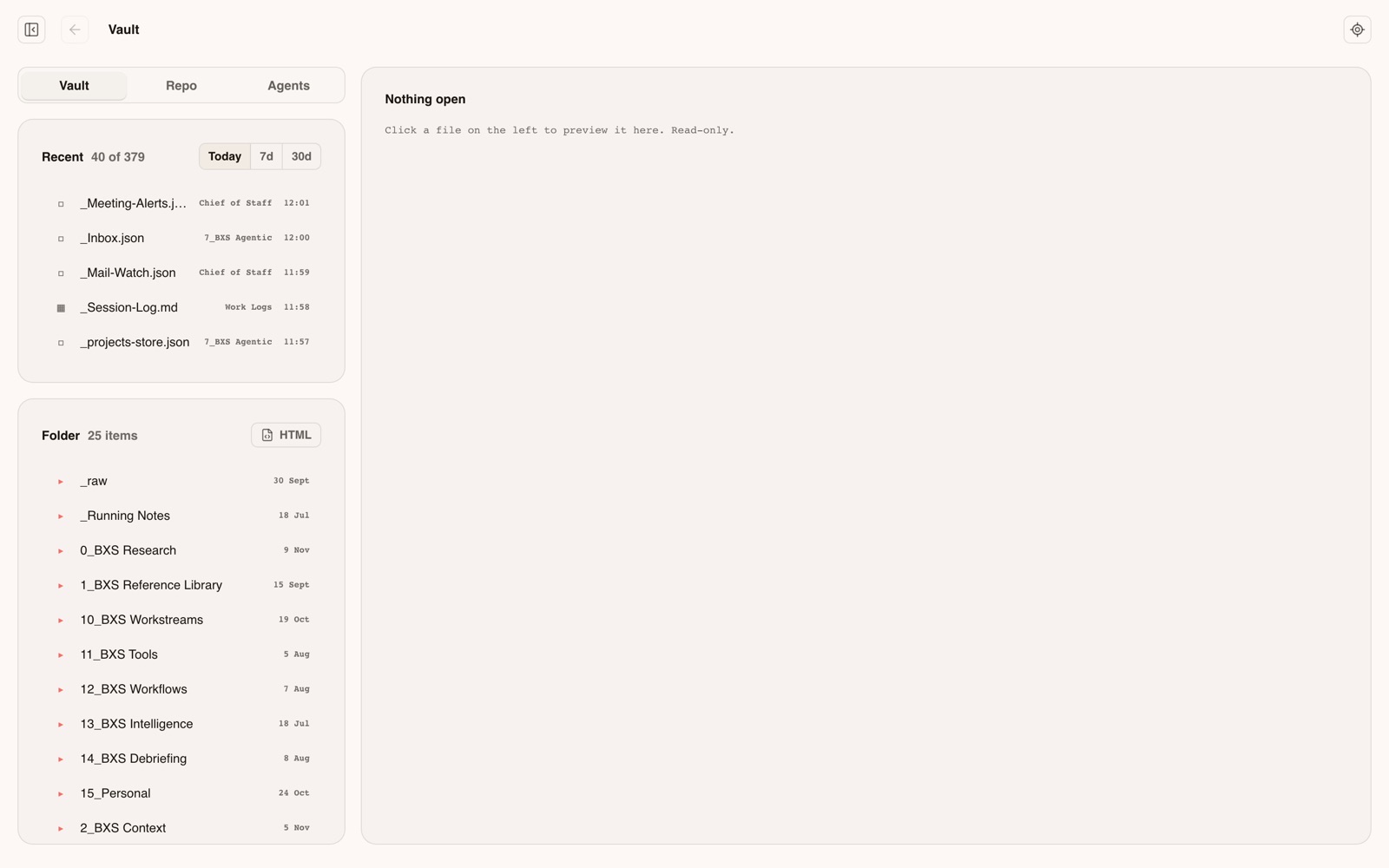
A reader for the notes vault, where the studio's method, decisions and logs live. It also shows every report an agent has put up, grouped by agent, and can follow along so whatever an agent puts up next opens in front of Oto.
- Runs on
- Mac
Making
11Brand Operating System
A platform for people building a brand themselves. Each brand has one record that every module reads, and eight modules run from the Brand Audit to Content Strategy. A quick read drafts the record from the brand's own website.
- Runs on
- Browser
Content Studio
Every post rendered as it will look on its platform. A week board mixes every platform and a view per platform shows one stream, so weeks of content can be read and edited as one body of work.
- Runs on
- Mac
Writing Studio
Where the long-form writing happens. Pieces are filed in collections by type, such as the book, essays, notes and a journal, each made of chapters. Agents can add notes, suggest and edit through their own routes.
- Runs on
- Browser
Artwork Studio
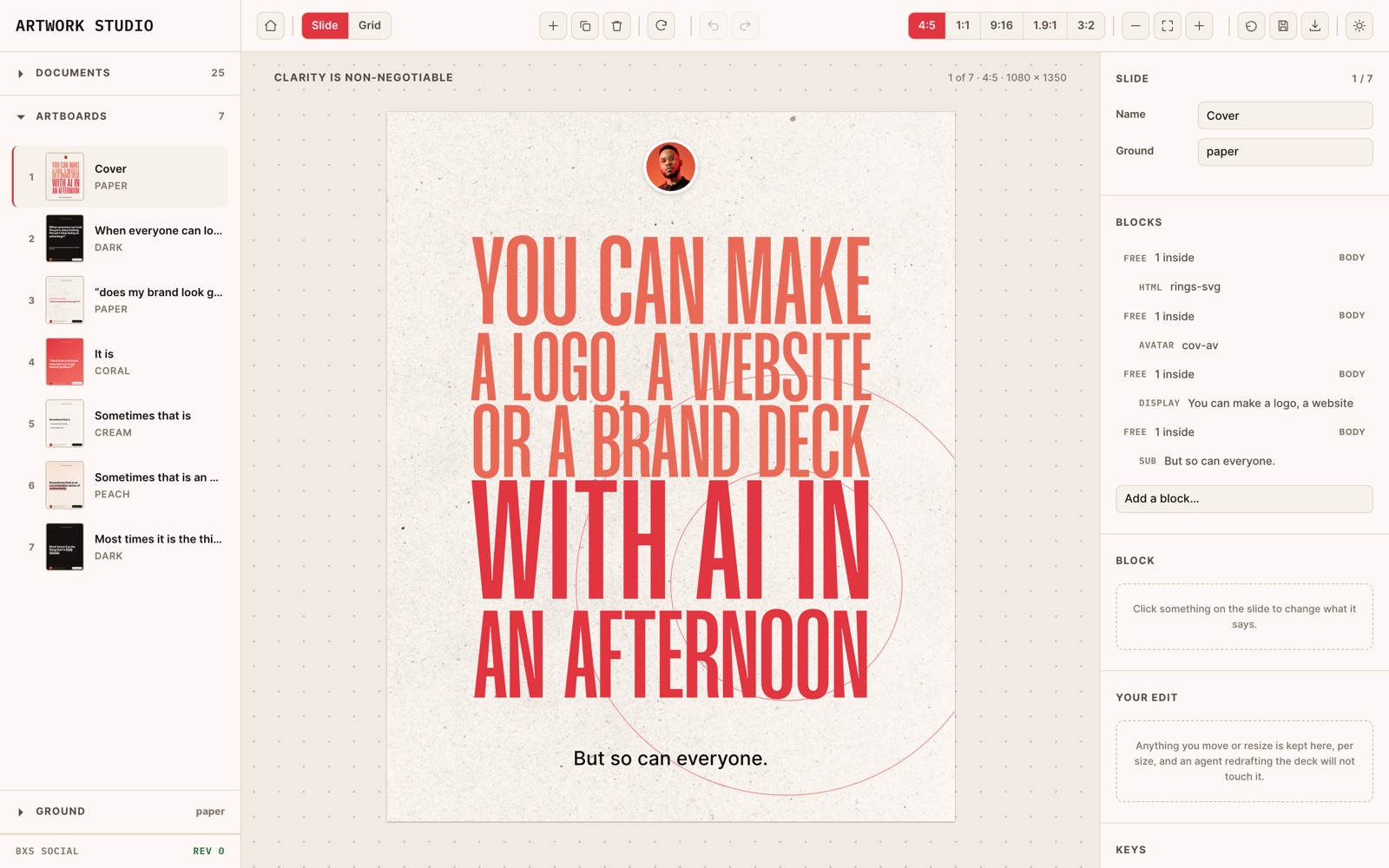
Artwork on a fixed page: carousels, flyers, banners and covers. An agent designs into a document, the tool renders it live, any block can be nudged before export, and an agent's own HTML artwork can be imported as a kit.
- Runs on
- Mac
Mockups
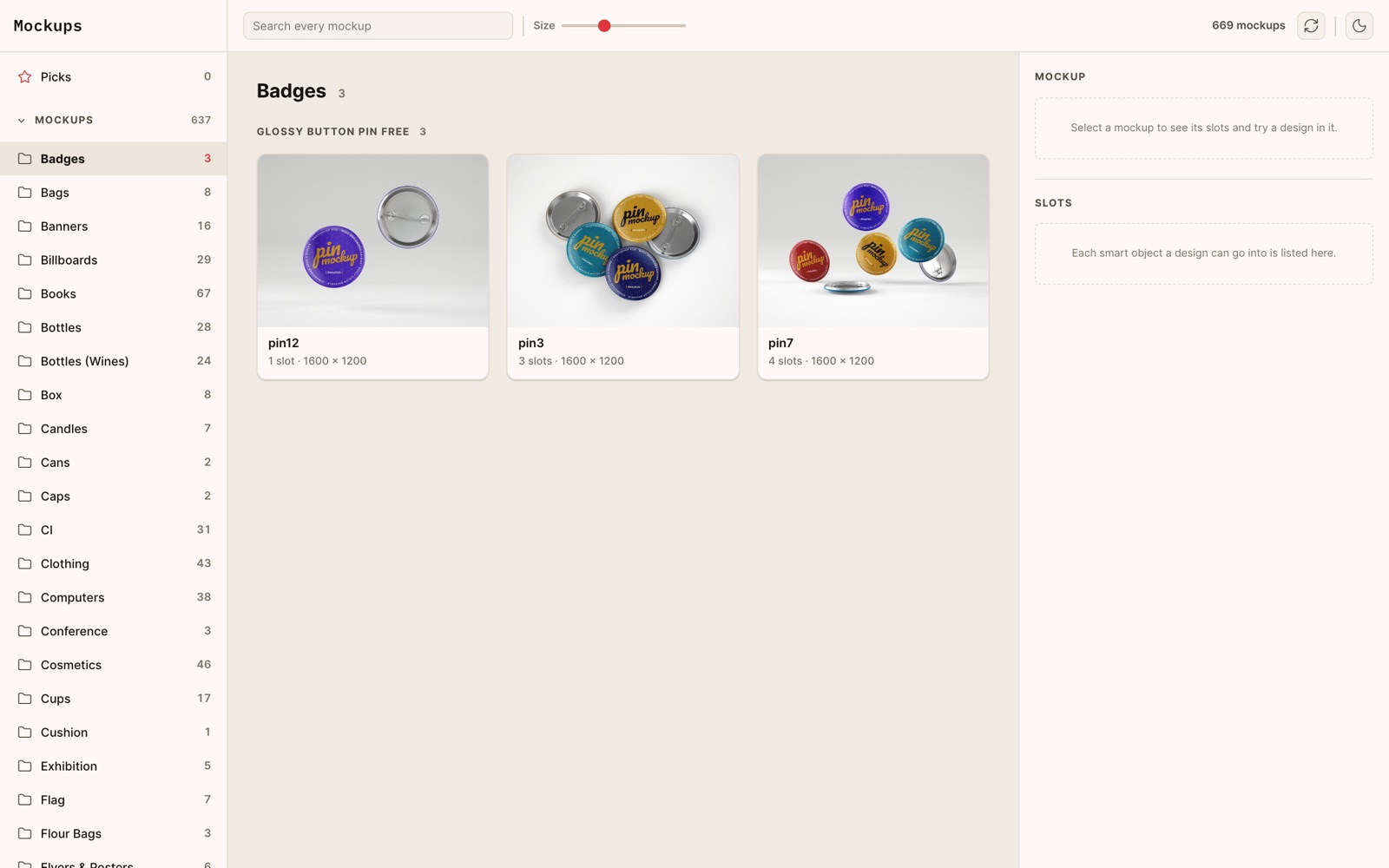
The studio's library of Photoshop mockup files, browsed by folder. Pick one for a project, place a design in its smart objects and render the result without opening Photoshop. Agents can fill picked mockups from the command line.
- Runs on
- Mac
References
The reference library: saved images and Pinterest pins filed into boards and browsed fast, with carousels of the studio's own images. It replaced Pinterest.
- Runs on
- Browser
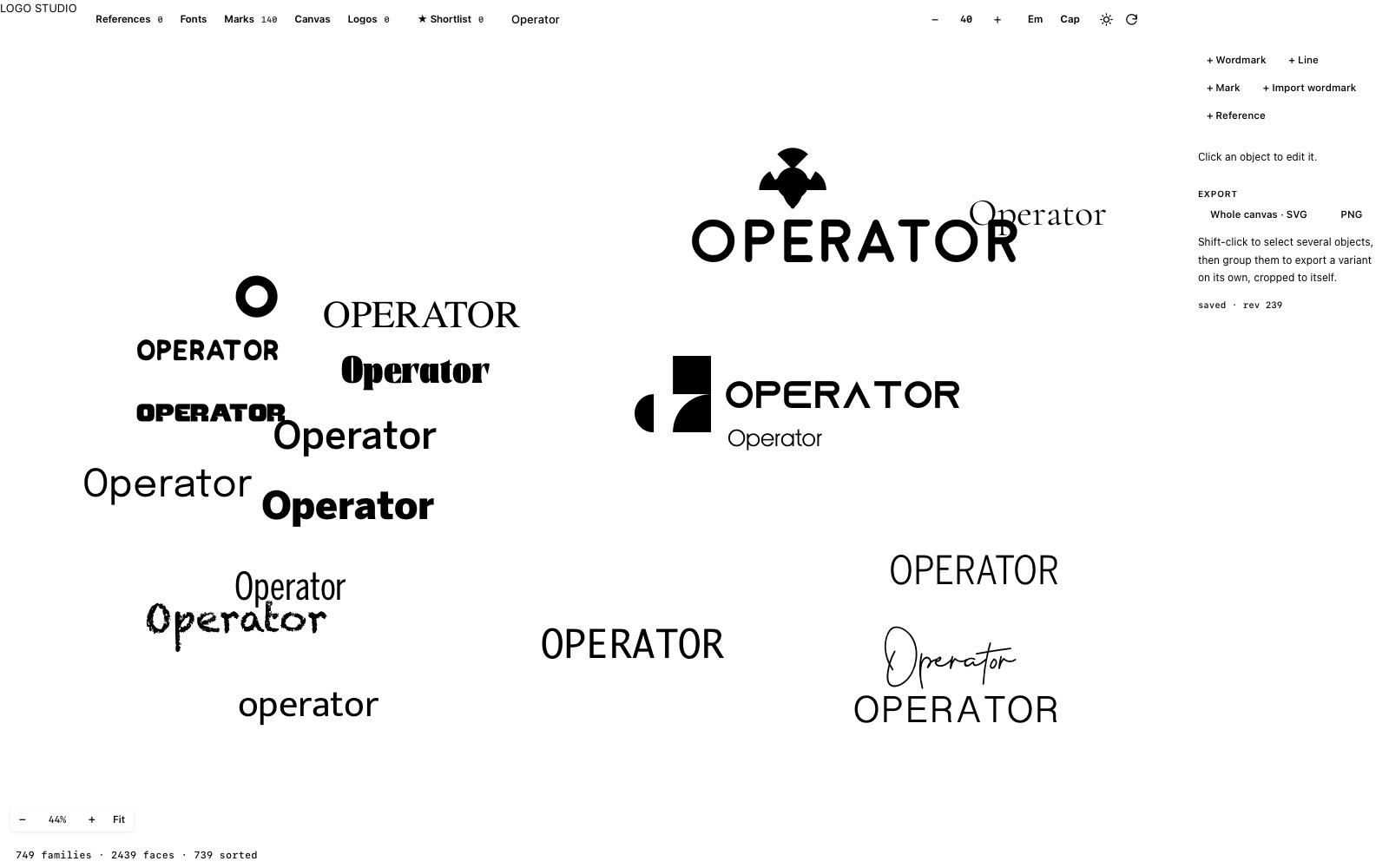
Logo Studio
A tool for finding a logo. It scans the fonts installed on the machine, generates marks, builds the lockup and exports wordmarks and marks as SVG with the type outlined.
- Runs on
- Mac
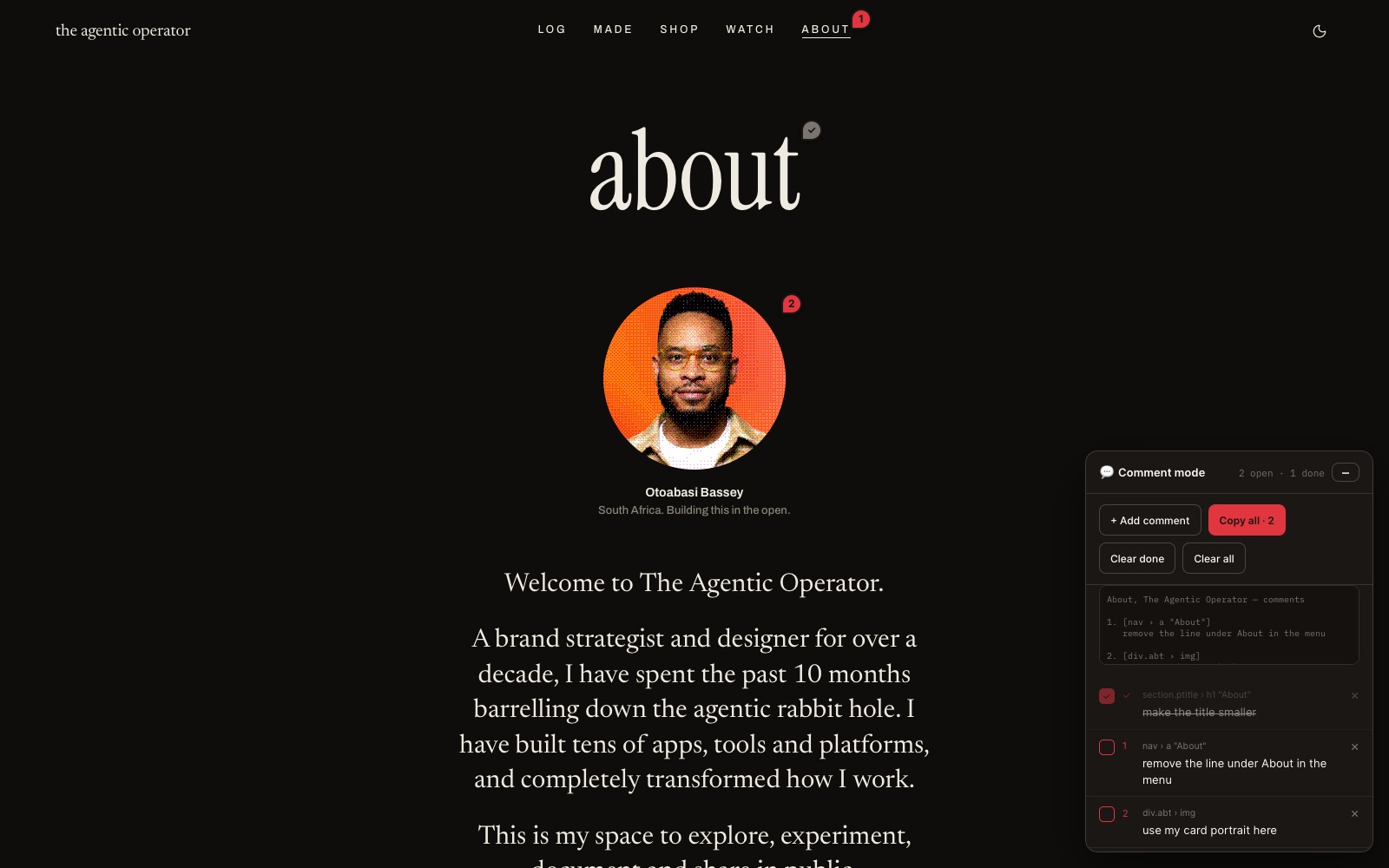
Comments
Live comment review for HTML documents. Notes are pinned to elements on the page and saved beside the document, where an agent picks them up, fixes each one in place and marks it resolved.
- Runs on
- Mac
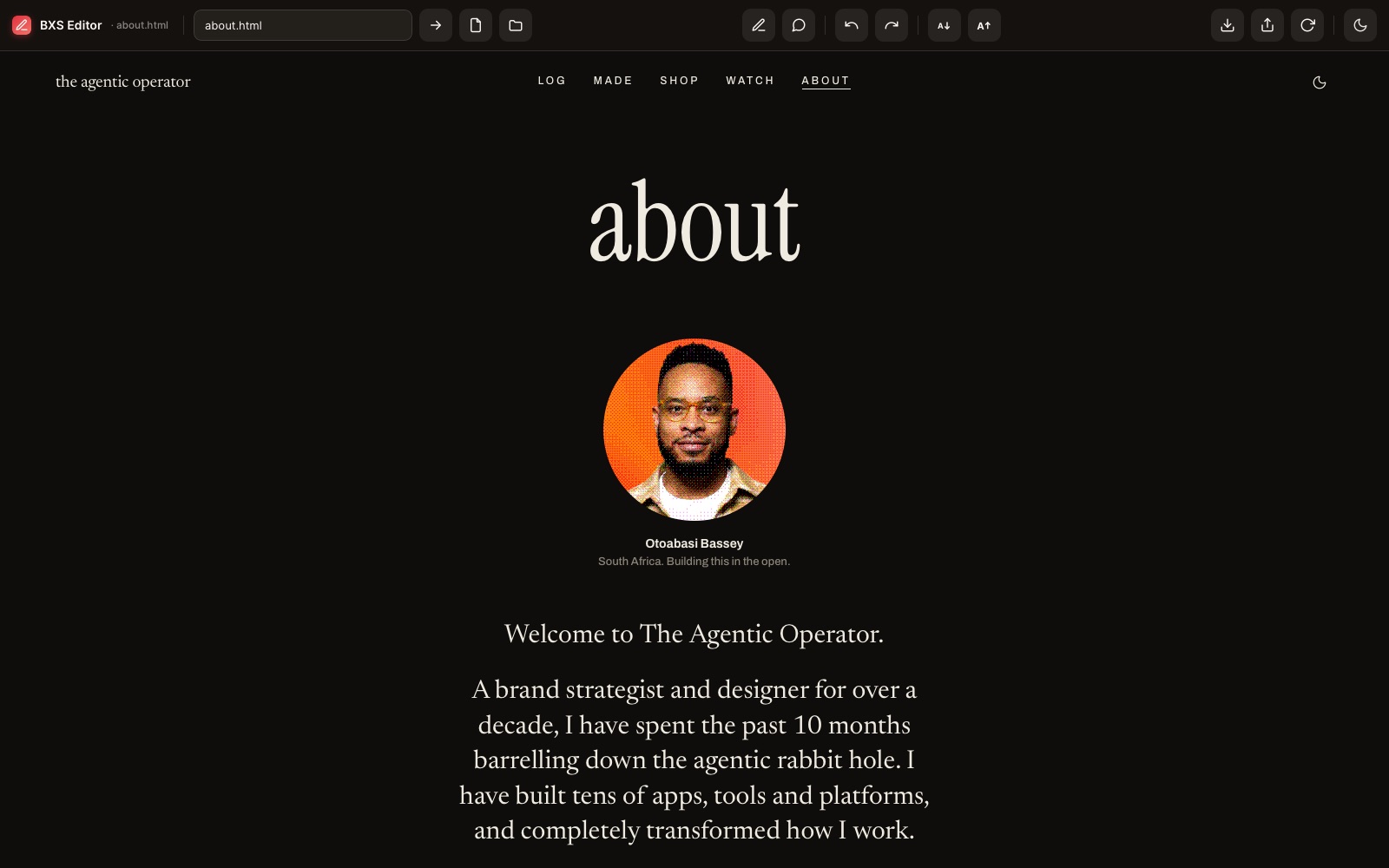
BXS Editor
Opens an HTML document from a file, a folder or an address so its text can be edited in place and comments pinned to it, then exports clean HTML or prints to PDF.
- Runs on
- Mac
A phone-shaped window on the desktop. Drop a link on it and the page loads as an iPhone browser would, so sites serve their mobile layout.
- Runs on
- Mac
Ghost Check
A free one-page tool. Enter a website address and it reads the raw page to report whether search and AI crawlers see the content or an empty shell, with the word count, title, meta description and a note for each of five crawlers.
- Runs on
- Free, in any browser

Home and life
4Casa B
A private household app shared by two people: calendar, meals and groceries. Only the sign-in screen is shown here.
- Runs on
- Phone

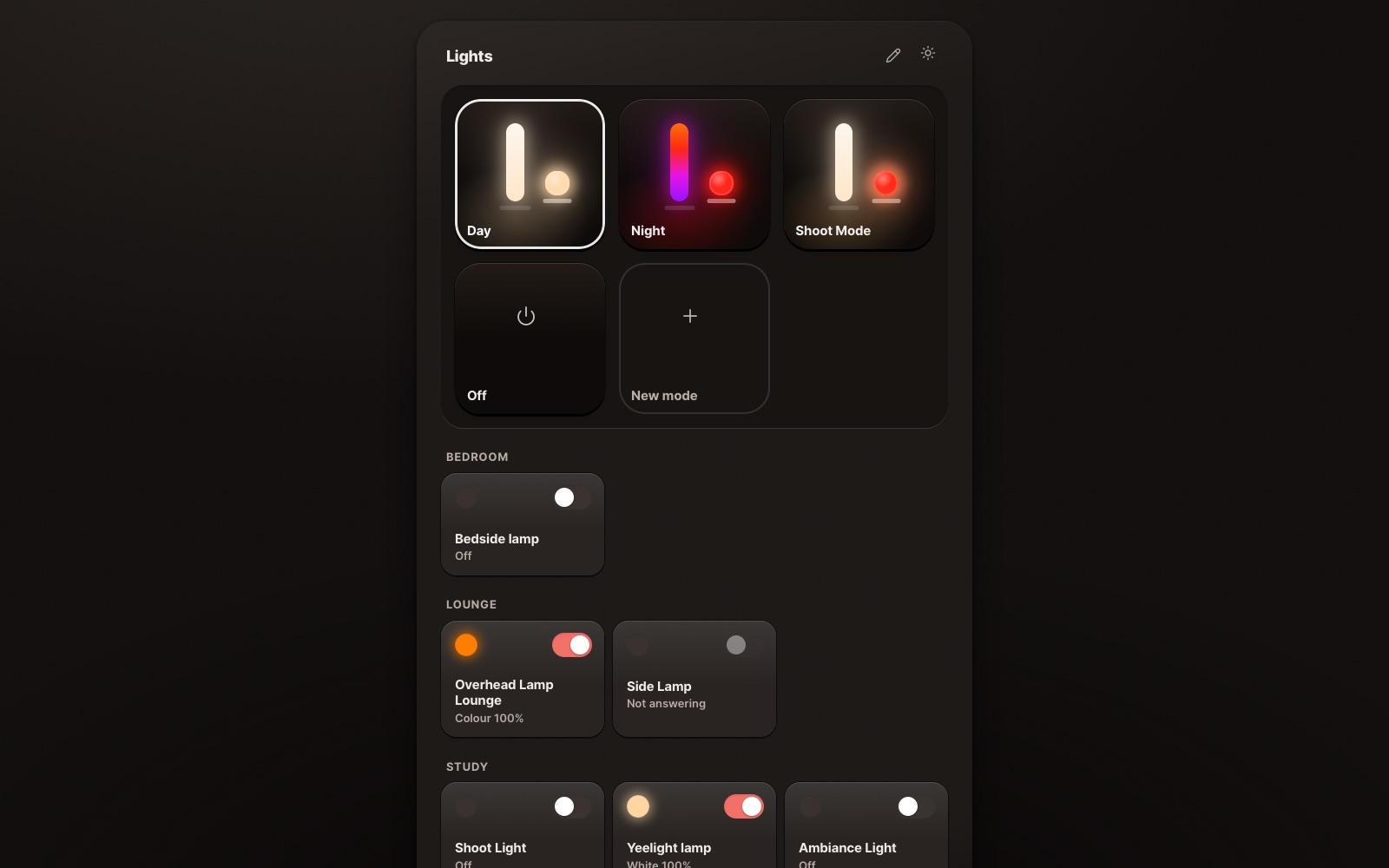
Lights
Day and night modes for the office lights. A small app on the Mac switches lamps from three brands over the home network, with no cloud or accounts, and the phone reaches it from anywhere through a private network. Each mode stores every lamp's state.
- Runs on
- Mac
Life OS
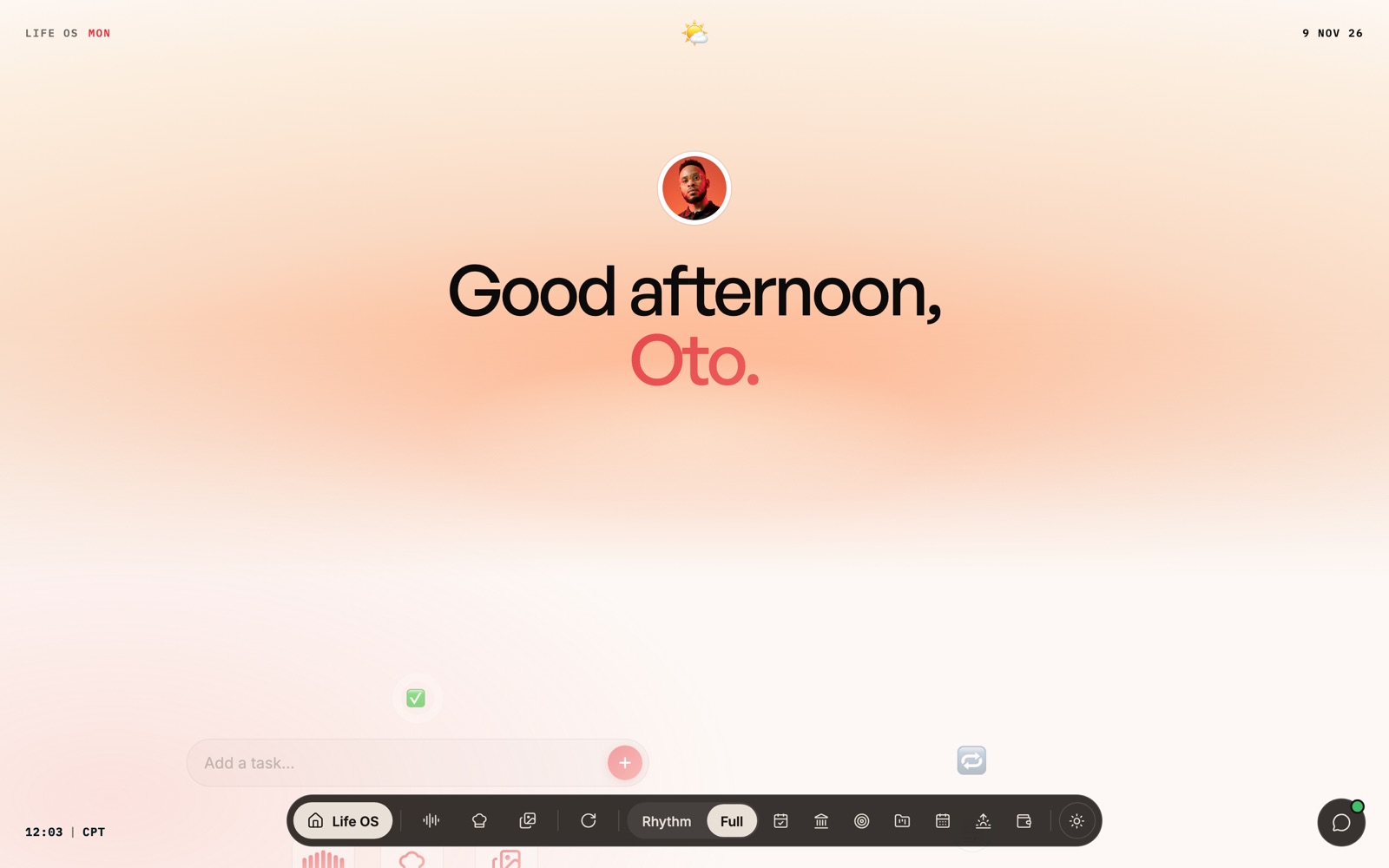
Oto's personal operating system, kept apart from the studio. A desk holds the day's tasks and habits, life pillars, focus, personal projects, routines and money, and opens a small family of apps: Rhythm, Cook and a moodboard.
- Runs on
- Browser
Money OS
A finance dashboard behind a sign-in, split into personal and business accounts. Monthly bank statements, converted to a fixed spreadsheet format by an agent skill, are imported and shown as income, spending by category and recurring costs.
- Runs on
- Browser